


You visit a website, look at a service or product, and move on with your day. Later, an ad for that same business shows up while you’re browsing somewhere else. That follow-up is retargeting, and understanding how it works can change how you think about the traffic your marketing already earns.
A website visit is a sign of interest, but it isn’t always the moment someone is ready to call, book, or buy. Retargeting gives businesses another chance to reach those visitors with a message that matches what caught their attention in the first place.

What Is Retargeting?
Retargeting is paid advertising aimed at people who have already interacted with your business, such as visiting your website or engaging with your content. Instead of introducing your business to an entirely new audience, you’re following up with people who already know a little about you.
You’ll also hear the word remarketing, but it’s a different type of marketing. With retargeting, paid ads reconnect with people who visited your website or engaged with your content, usually while they browse other websites or social platforms. Remarketing typically uses contact information people have already shared with you to follow up through email or other direct communication. For example, a retargeting ad might show up for someone who viewed a service page, while a remarketing email might follow up with someone who previously requested information.
Ad platforms can use website tags, pixels, and other permitted signals to build groups of eligible visitors. Those groups are called audiences. Depending on the platform, tracking setup, and visitor consent, businesses can then show relevant ads to people in those audiences as they browse or search elsewhere.
The important part isn’t the pixel itself. It’s knowing which visitors are worth following up with, what they were interested in, and what message would help them take the next step.
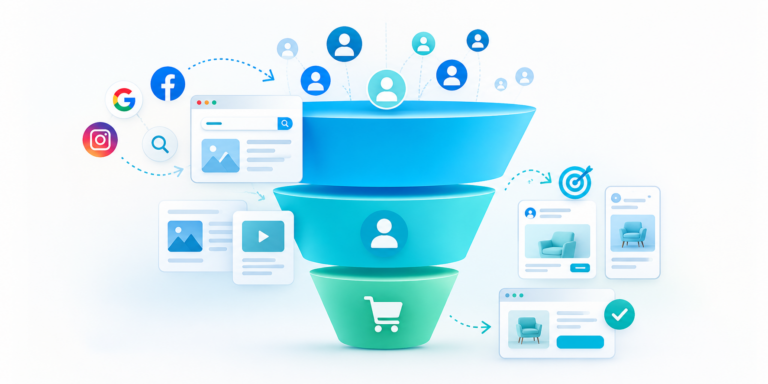
Where Retargeting Fits in the Sales Funnel
Think of the sales funnel as the path from discovering a business to becoming a customer. Each stage needs a different message, and retargeting
helps connect those stages.
- Top of funnel: Awareness. SEO, content, paid search, and organic and paid social media introduce your business to people who may not know you yet.
- Middle of funnel: Consideration. Someone has visited your site or engaged with your content and is comparing options. Retargeting keeps the service or offer they viewed in front of them while they decide.
- Bottom of funnel: Conversion. A person who came close to booking, requesting a quote, or purchasing may benefit from a timely reminder or a more specific reason to return.
This is why retargeting belongs alongside your traffic-building efforts. SEO and ads help people find you. Retargeting helps you continue the conversation after that first interaction.

Better Retargeting Starts With What Visitors Actually Did
Showing every past visitor the same ad misses one of retargeting’s biggest advantages. A good campaign separates audiences by behavior so the message fits the level of interest.
- Visited a service page. Someone researching your website design services could see an ad featuring a relevant project or an invitation to discuss their website.
- Started a contact form. A visitor who began requesting a quote but didn’t submit it could see a reminder about scheduling a consultation.
- Abandoned a shopping cart. An online shopper could see the products they considered, with a direct route back to checkout.
Those visitors aren’t equally close to buying, and they shouldn’t receive identical ads. Audience selection and timing matter. For example, you generally don’t want to keep showing a first-time inquiry ad to someone who has already become a customer.
Google explains how advertisers create audiences from visitor behavior in its documentation on website visitor segments. The setup is technical, but the marketing principle is simple: make the follow-up useful.

Can Retargeting Improve Conversion Rates?
Prospecting and retargeting reach people at different points in the buying process. Prospecting introduces your business to new audiences. Retargeting reaches people who have already visited or engaged, so some are closer to making an inquiry or purchase. That is why retargeting campaigns can report stronger conversion rates, even though the actual results depend on the audience, offer, and campaign setup.
Google Ads shares one example: tire retailer Tirendo saw a 161% conversion rate increase when targeting audience segments made up of previous website visitors or app users with Search ads, leading to a 22% overall sales increase. Previous website visitors are exactly the audience retargeting is built to reach. See Google’s advertiser example and Search audience guidance.
That’s a result from one advertiser, not a promise that every campaign will perform the same way.
The Tirendo result shows what a well-targeted follow-up campaign can achieve, but it isn’t a direct comparison with prospecting. For your business, the useful comparison is how each campaign contributes: prospecting brings new people in, while retargeting works to convert people who have already shown interest. BoBella can measure qualified calls, forms, bookings, or purchases and adjust both approaches based on what produces results at a sustainable cost.
That requires more than launching ads and checking clicks. Conversion tracking, sensible audience exclusions, and ongoing adjustments help keep campaigns focused on meaningful results. We’ve covered why those details matter in 5 Google Ads Mistakes That Cost Small Businesses Money.
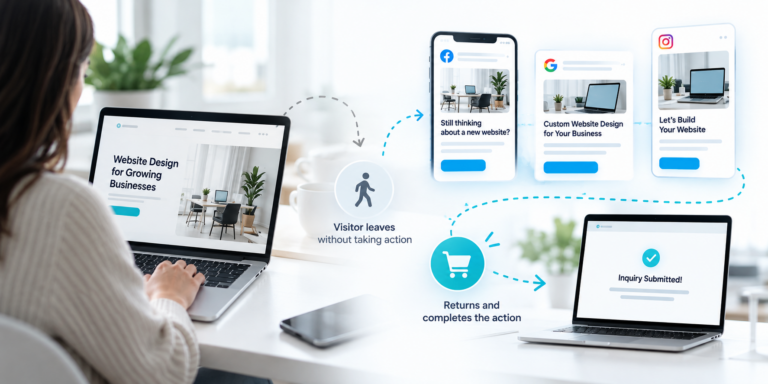
What It Can Cost to Leave Retargeting Out
You put time and money into getting people to your website. Maybe they found you through a Google search, a social post, or an ad you paid for. When an interested visitor leaves without taking action, retargeting can give you another opportunity to reach them rather than relying entirely on a return visit. The missed opportunity isn’t just another impression. It’s the chance to show someone the service they looked at, answer a concern they may still have, or make it easier to complete a step they already started.
Retargeting does need enough eligible traffic to build usable audiences. Google currently lists a minimum of 100 active users in the past 30 days for eligible website visitor segments on Search, Display, and YouTube, though actual reach depends on platform and campaign settings. That’s another reason to build retargeting into a larger strategy rather than treating it as a substitute for bringing new people in. Google’s audience requirements explain the threshold.
Putting Retargeting to Work With BoBella Brands
An effective retargeting campaign involves more than turning on an audience and recycling the same ad. The audience needs to make sense, the message should reflect what visitors did, and the campaign needs to be measured against real business goals. That takes planning, tracking, testing, and ongoing management.
At BoBella Brands, we bring those pieces together through Google Ads management and retargeting services. We look at how people find your business, where they show interest, and how paid advertising can bring the right visitors back with a more relevant next step.
If you’re already getting website traffic but want more of those visits to turn into inquiries or sales, talk with the BoBella Brands team about how retargeting could fit into your advertising strategy.